

A Unified Approach to Management: Beeline Uzbekistan’s “Manager in Rhythm” Program Wins Gold at EMBRAS 2026
News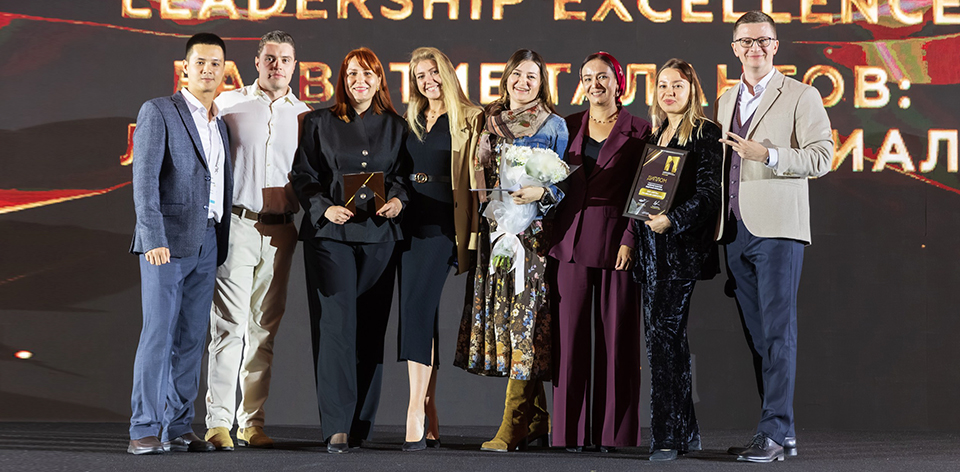
The project we built ourselves helped managers speak a common language, and their teams saw the difference: the management quality index rose by 7 percentage points
Beeline Uzbekistan’s “Manager in Rhythm” leadership development program has won gold in the “Talent Development: Leadership Potential” category at the EMBRAS 2026 awards. In 2025, 172 managers from the head office and the regions went through the program, which the company’s learning and development team built from scratch.
In 2024–2025 the company was changing fast: digital businesses were growing and workloads on teams were rising. The 2024 engagement survey pointed to areas where managers could grow, in managing execution and managing teams. Over the years, each manager had developed their own way of setting tasks, giving feedback and making people decisions, and the company needed a common management language.
“‘Manager in Rhythm’ is Beeline Uzbekistan’s flagship manager development program, launched in 2025. Its goal is to raise the quality of everyday management across the company by teaching effective practices for managing execution and teams, thereby supporting high employee loyalty and growth in key business metrics,” said Evgenii Ermakov, head of the learning and talent development department.
Before the program started, managers’ teams took a survey, which was used to calculate the Regular Management Quality Index (RMQI). In April 2025 it stood at 65%. The managers themselves took a case-based test in May, and based on the results each received an individual learning track.
“We deliberately made the content short and practical: it’s packed with step-by-step frameworks you can put to work right away.” — Yulia Bukaeva, corporate trainer.
The program ran from May to December: seven modules on the distance-learning platform, with video lessons of up to 50 minutes. All content was developed in-house. After each module, managers completed an assignment on a real work task rather than a training case.
The program covers seven key practices of everyday management: planning, delegation and oversight, giving feedback, running meetings, people decisions, assessing performance and potential, and developing employees.
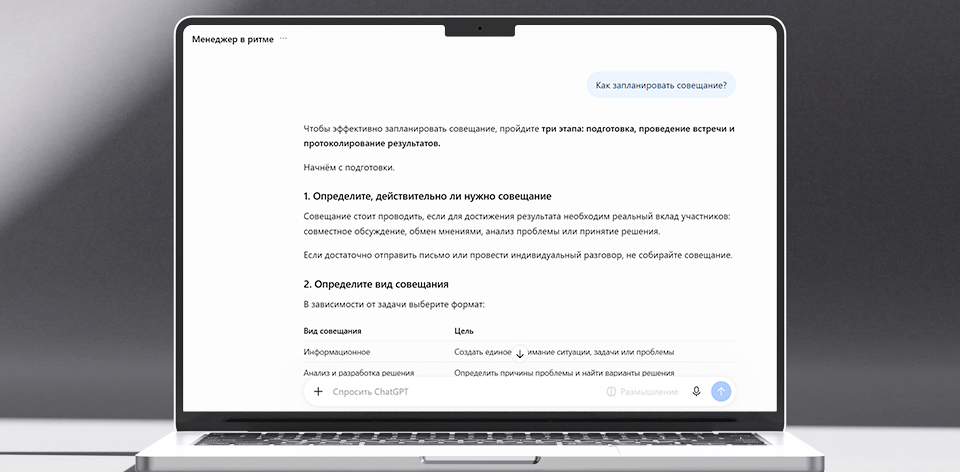
To help managers rehearse difficult conversations, the team built an AI trainer, also named “Manager in Rhythm”. It works as a chat: it answers questions about the program materials and helps managers practice typical situations such as planning, delegation, oversight and giving feedback. For example, a manager types: “How do I delegate a task properly?” The trainer asks which task, to whom, and how experienced and motivated the employee is, then plays the role of that employee. The manager holds the conversation following the framework from the course: what the task is, why it matters, how ready the employee is, instructions, and follow-up. Managers can practice between sessions as often as they need.
“The AI trainer has become a working tool I turn to often: to think through a difficult conversation with an employee, check myself against the framework from the course, or plan a task for both an experienced employee and a newcomer. It takes a few minutes and helps me walk into the meeting prepared.” — Akmal Fayziev, head of the PR department and program participant.
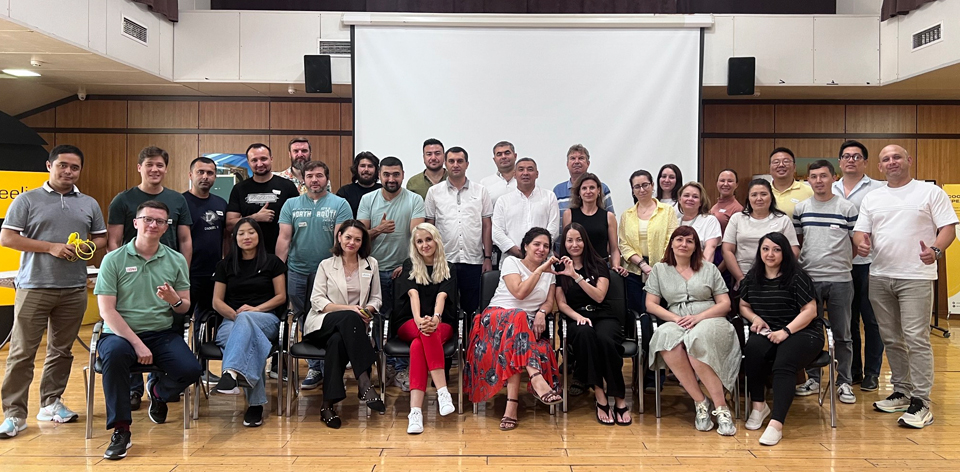
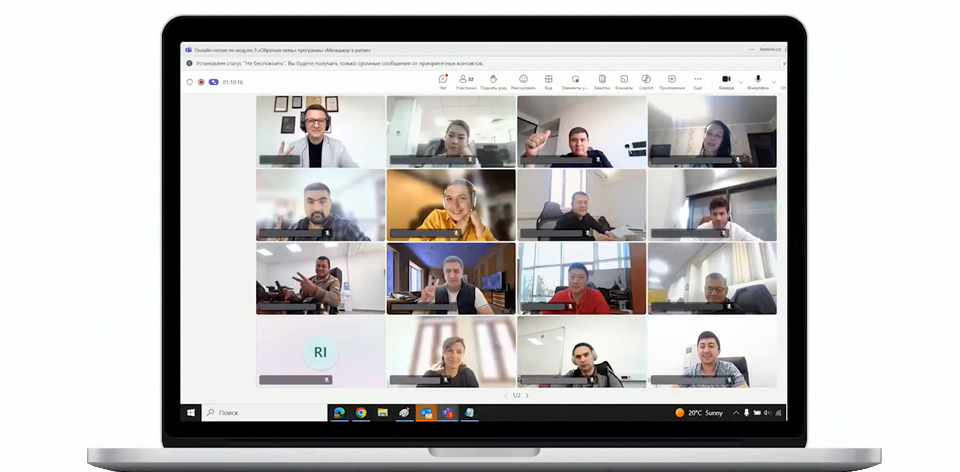
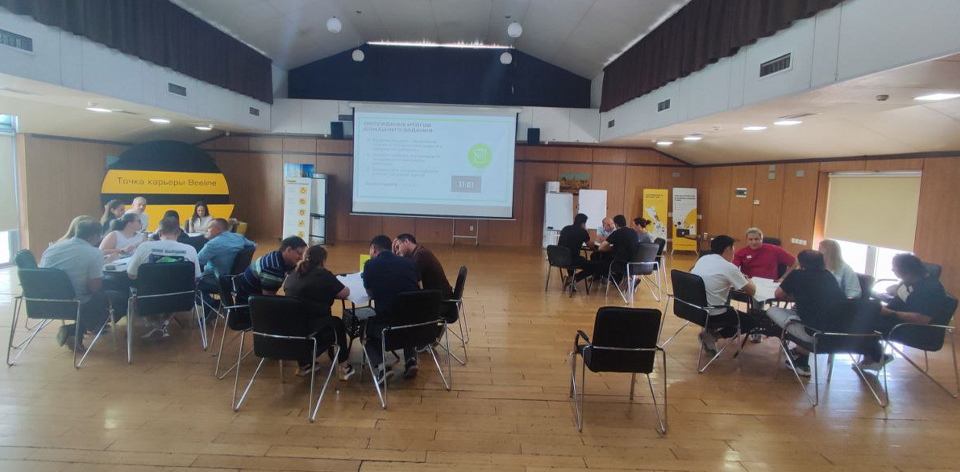
Between modules, participants met in reflection sessions, in person over the summer and then online. Managers looked at what had worked in their teams and shared their own techniques.
“We usually talk with colleagues from other departments only about work tasks. At these sessions we discussed, for the first time and in detail, how each of us manages our team, and it turned out our questions were very similar. Now when we talk about delegation or feedback, we understand each other without long explanations.” — Akmal Fayziev.
The program’s results were measured not by final tests but by how teams see their managers’ work. In January 2026 employees took the survey again, and the index rose from 65% to 72%. Behind those seven points are changes that teams noticed in their daily work: how tasks are set, how meetings run, and how managers give feedback.
“It was important to us not only that managers completed the training, but also whether they apply it. The rise in the index shows that the new practices have become part of teams’ daily work.” — Evgenii Ermakov.
By the end of the program, the company’s managers had shared practices and a shared language: delegation, feedback and assessing potential now mean the same thing to everyone. “Manager in Rhythm” has become part of onboarding, so every new manager at Beeline Uzbekistan starts with the same seven practices as their colleagues.
The EMBRAS 2026 gold in the “Talent Development: Leadership Potential” category is a high external recognition of this work. And every new manager at the company now follows the path of “understand, try, discuss, start applying.”
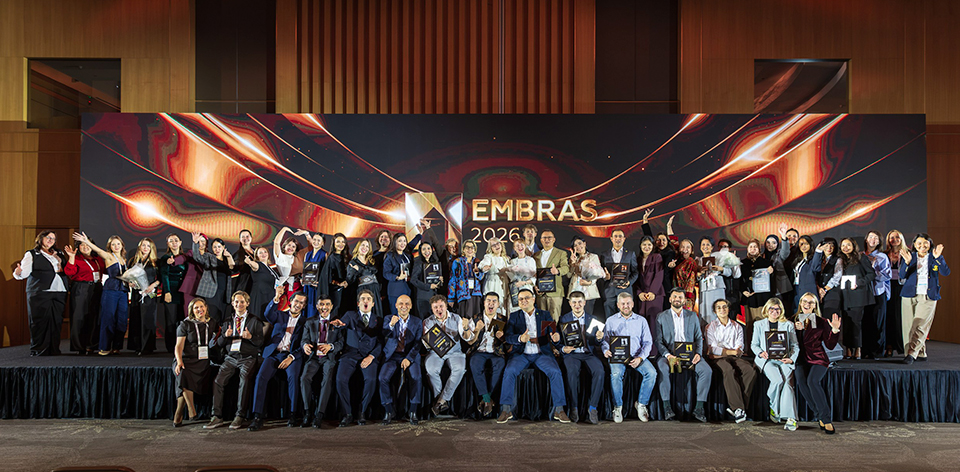
“The EMBRAS 2026 award recognizes the systematic work we do with our managers. In this program, we combined live learning with AI: managers prepare for difficult conversations with the AI trainer and share their experience with colleagues in the sessions. How a team works every day depends on its manager, and so does how quickly and how well we serve our customers. The program teaches managers to manage both execution and the team effectively, so that they achieve strong business results and keep employee engagement high.” — Sofia Gaynutdinova, Director of HR and Organizational Development.
EMBRAS is a prestigious international employer brand award. It honors companies for the most successful HR projects, programs and initiatives in employer branding and the wider HR industry.